THE SUPPORT TESLA?
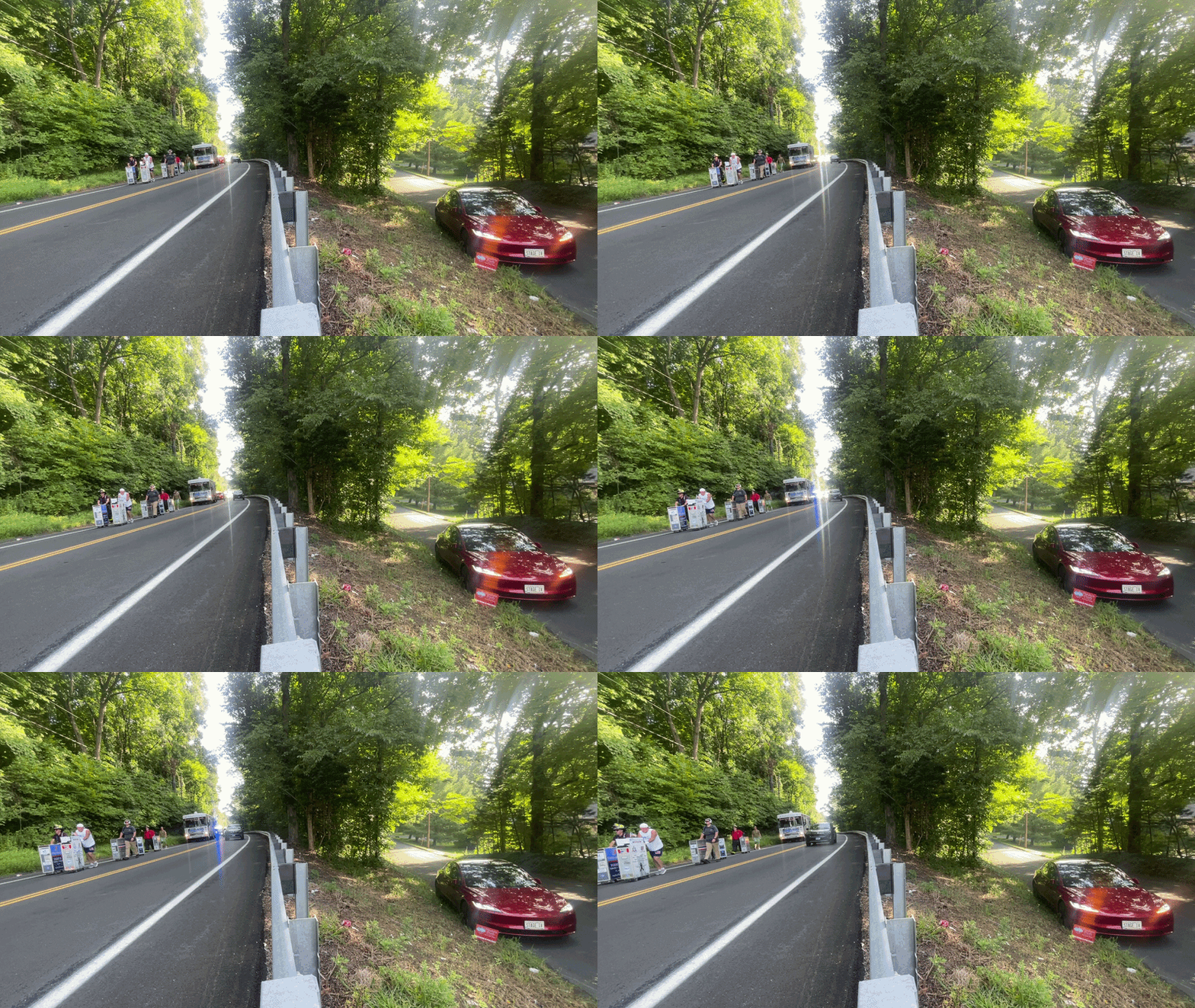
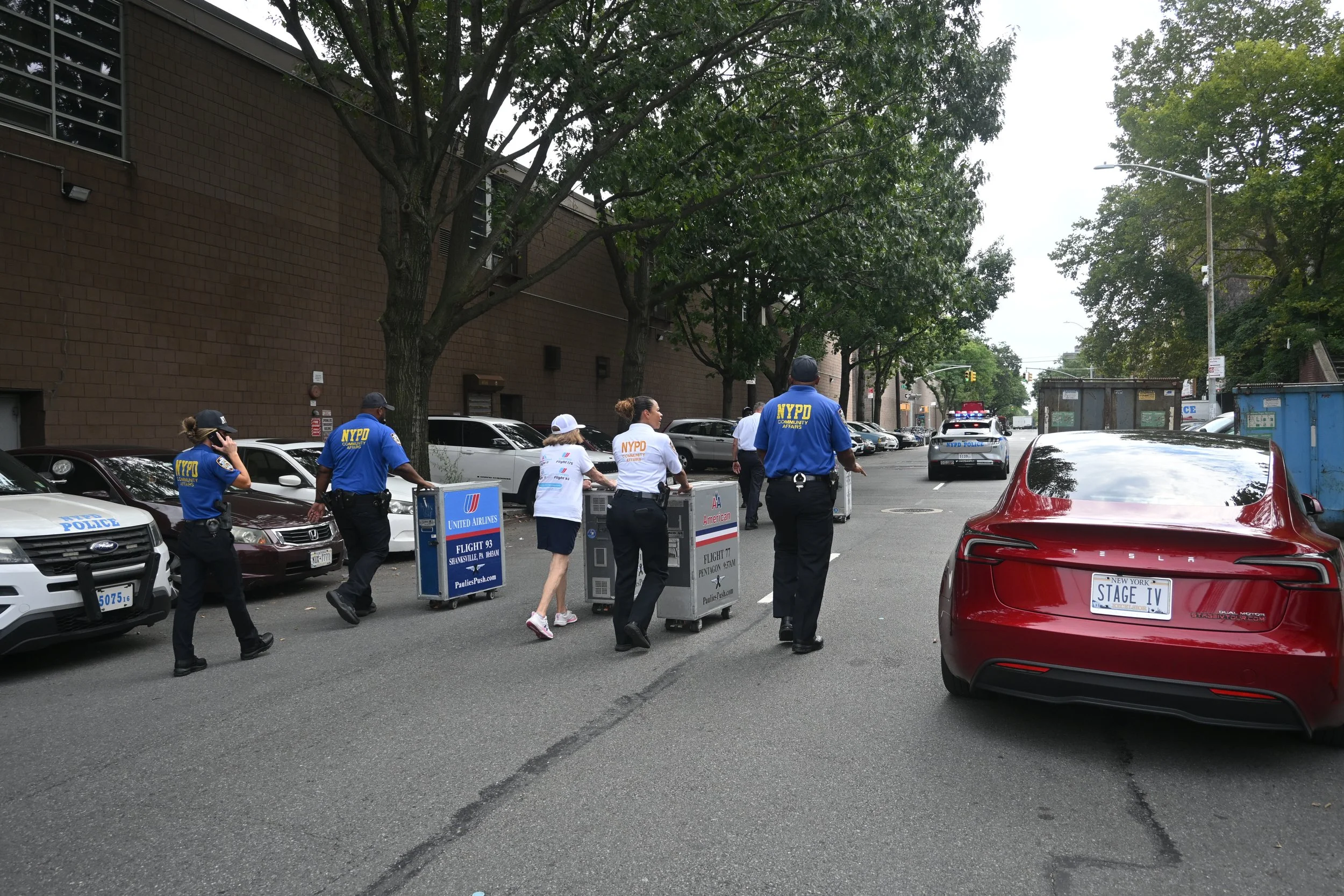
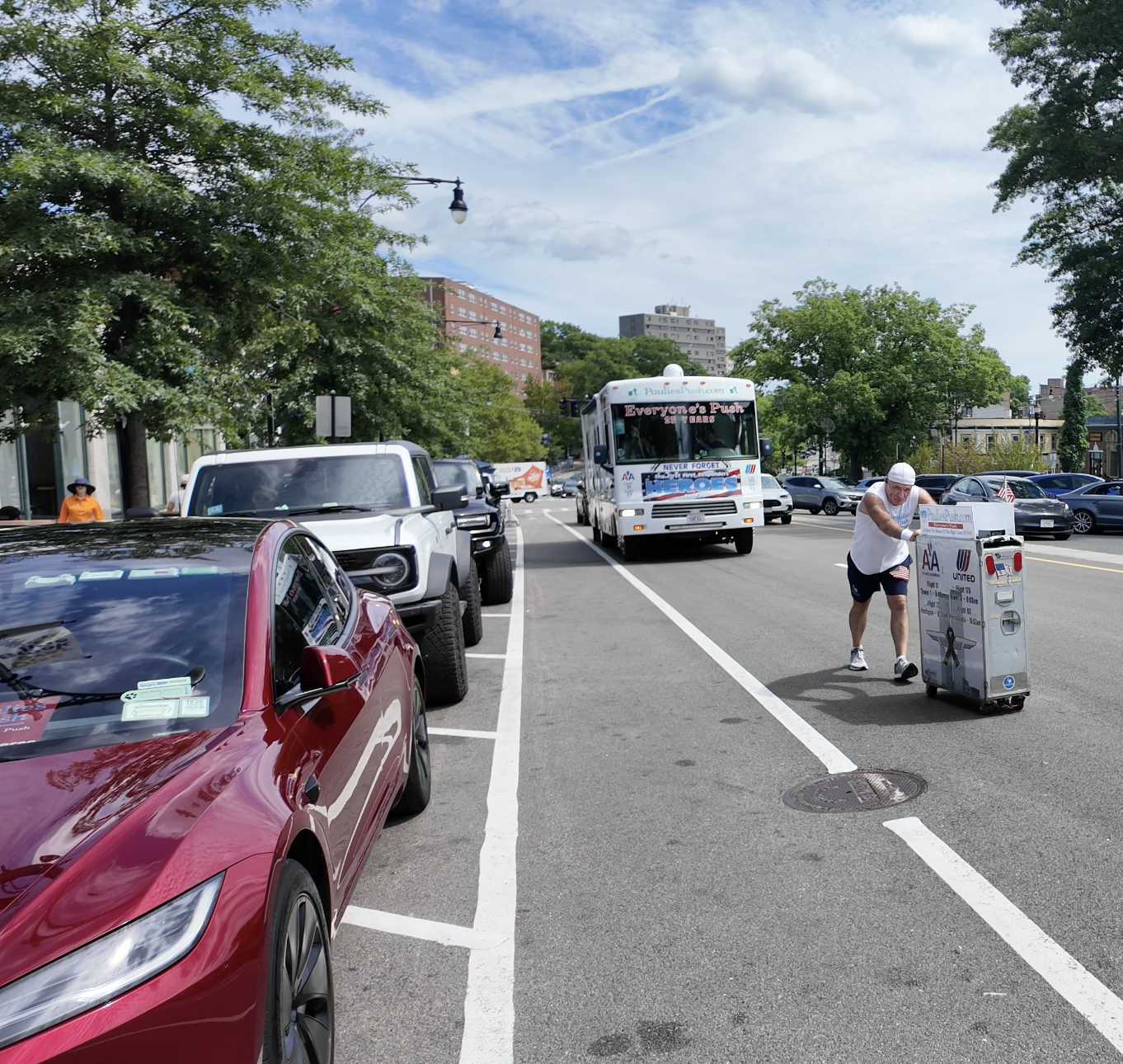
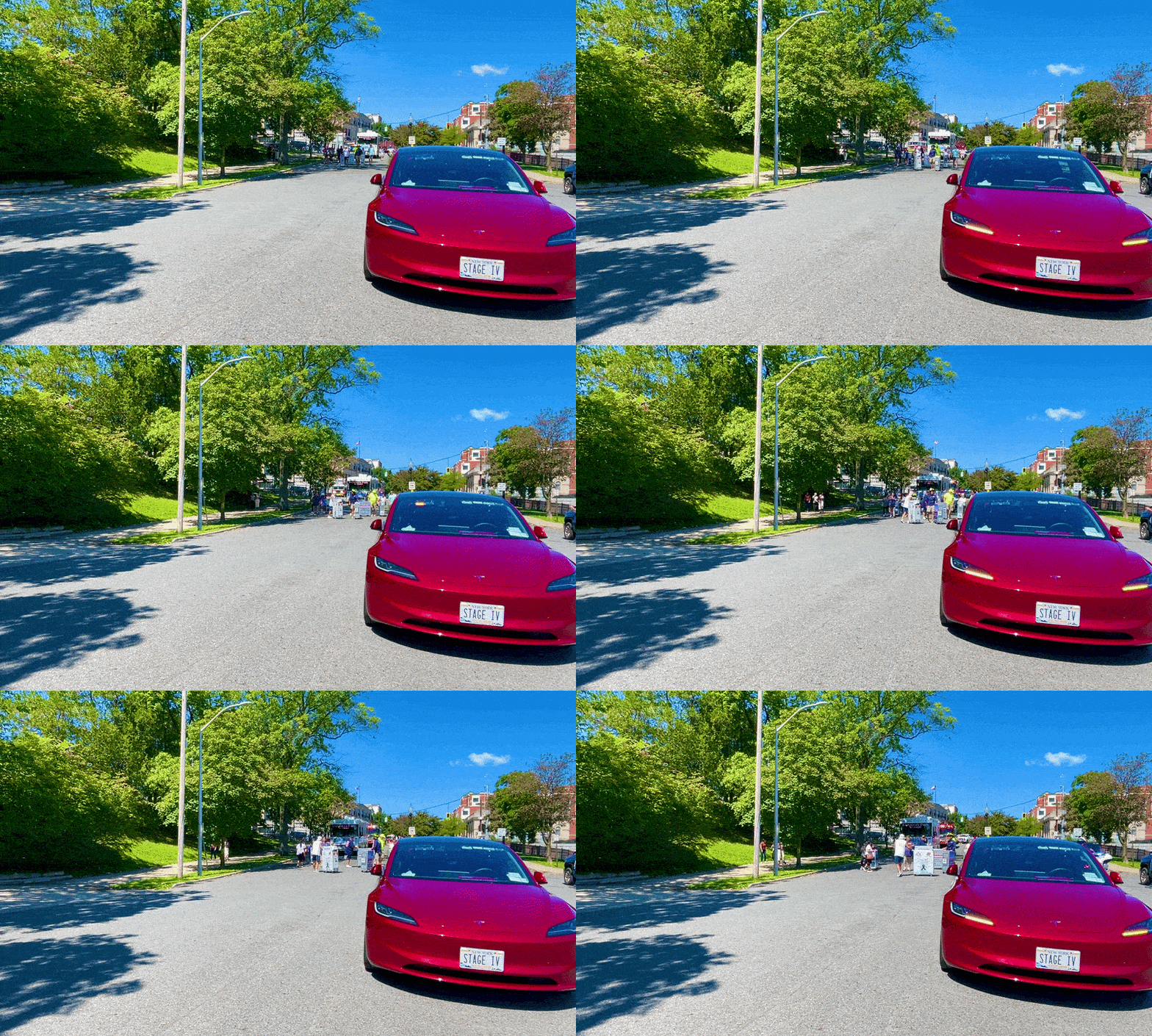
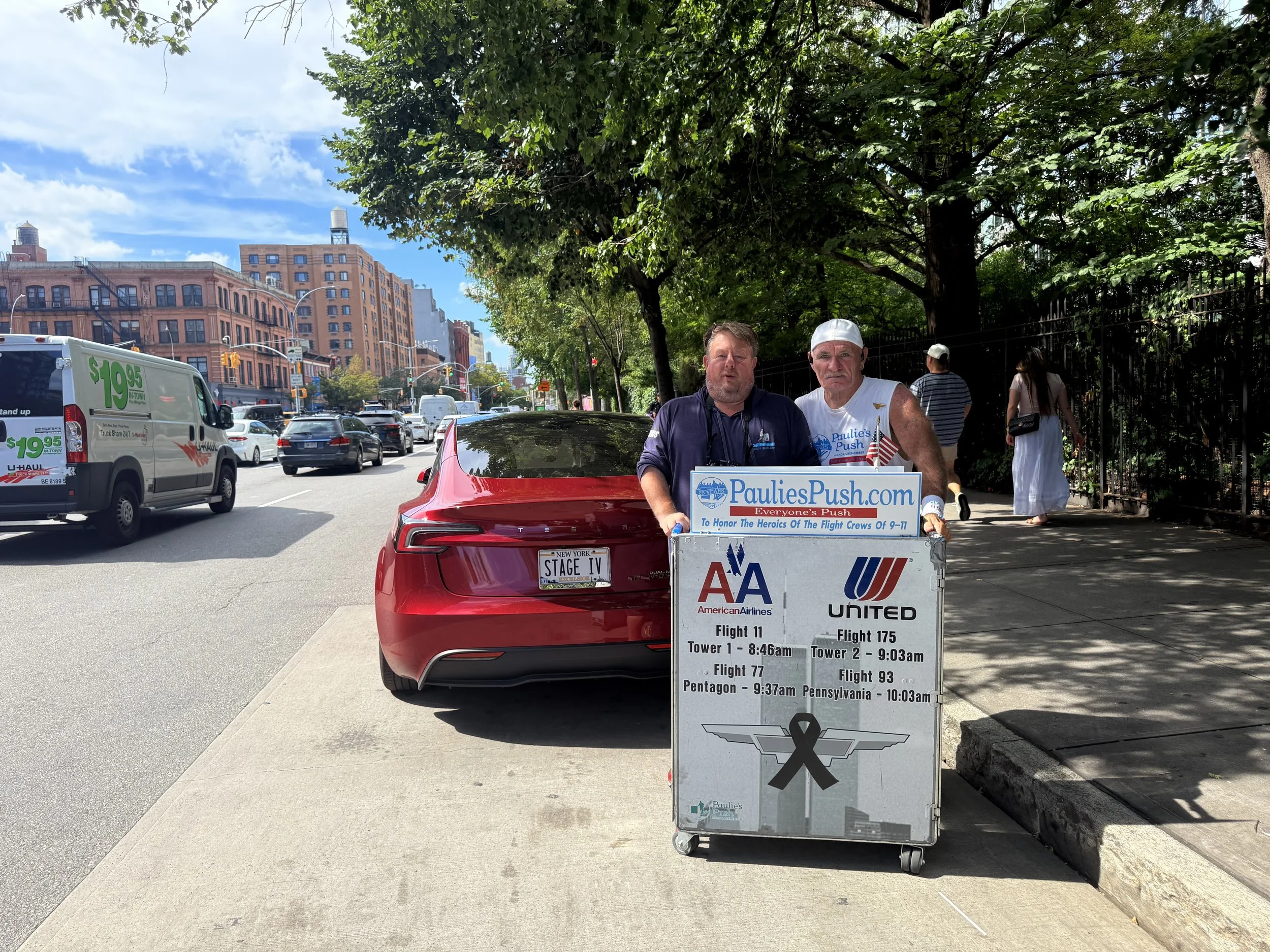
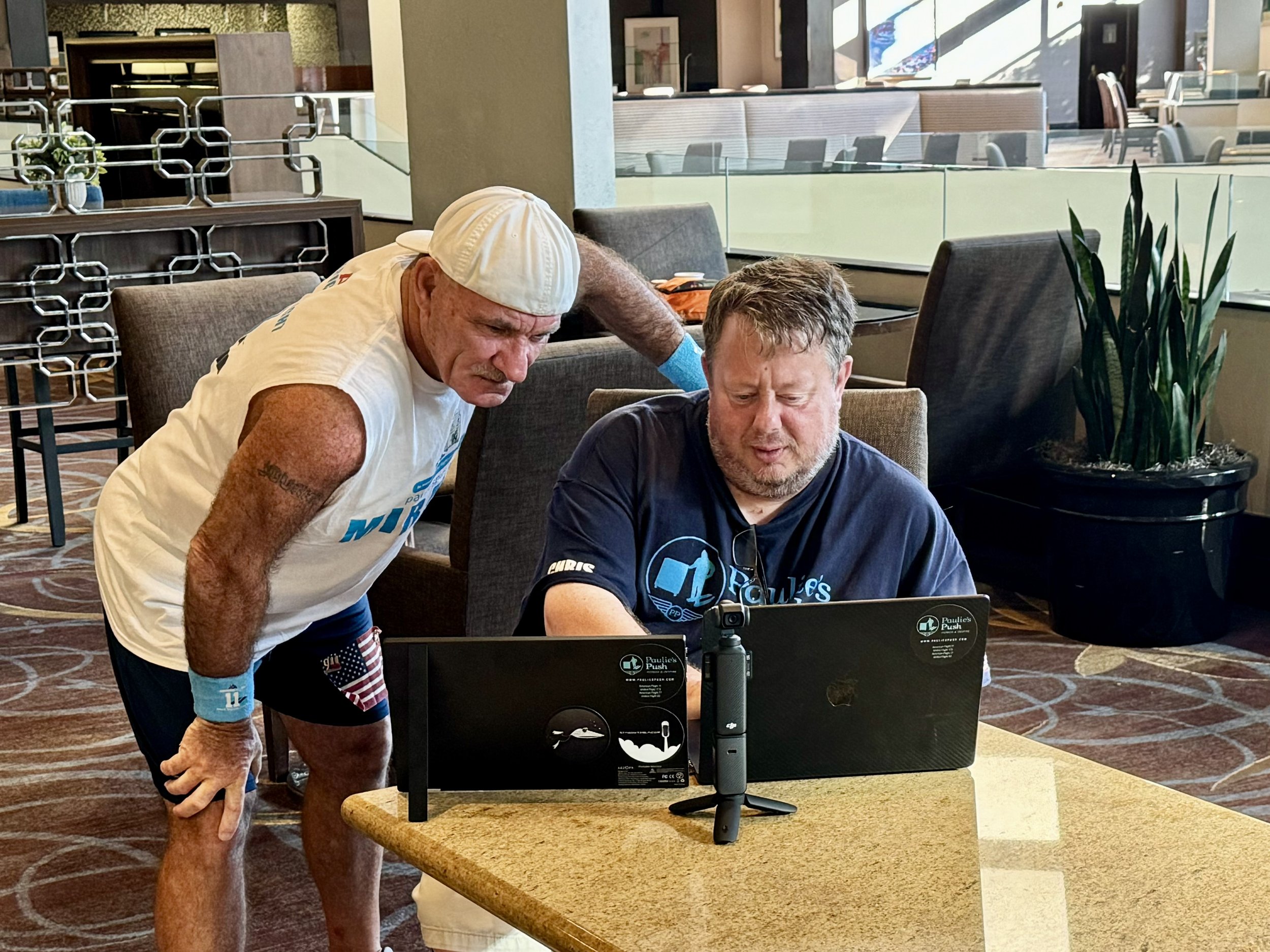
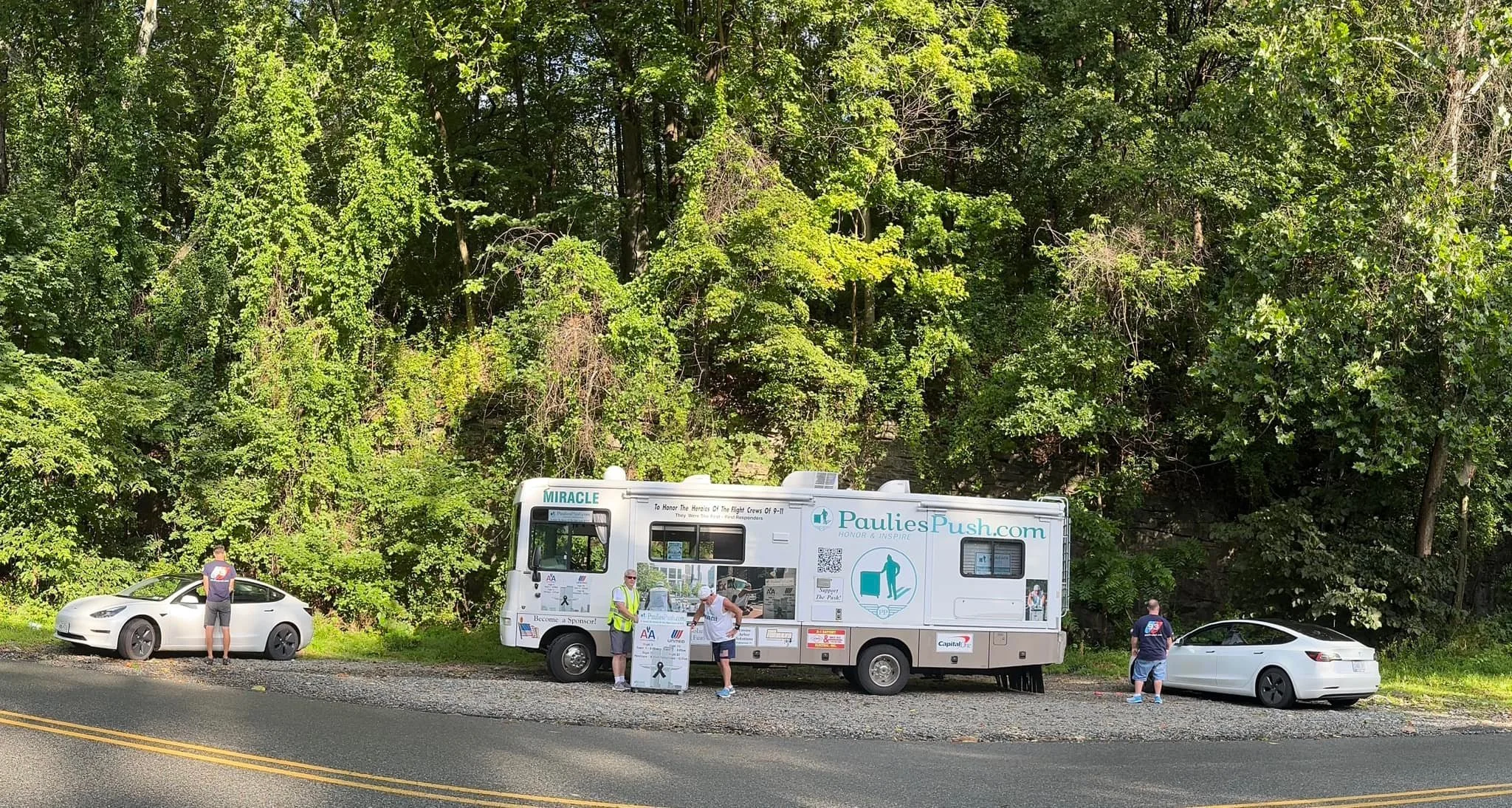
Since 2021 I’ve handled media relations and digital media for Paulie’s Push, a Massachusetts-based 501(c)3. The perfect vehicle for this? Tesla Model 3. In 2026 mine served as a mobile command center for Everyone’s Push for 25 Years.
A SOCIAL MEDIA COMMAND CENTER ON WHEELS?
My first foray into the world of public relations came in college, when the father of a friend, who also happened to be a principal at an advertising agency in the city I was attending college, invited me and another person to come in, tour the agency, and interview for internships.
It was love at first sight - all of these creative people doing creative things. It was hard to believe that this was actually a job. I was hooked.
My friend’s father was not. At the end of the interview he described what the internship would actually be: account management.
“The side of creative advertising that pays the bills,” he’d told us.
There would be room for “creative” in careers later on down the line.
First, though, before we went any further, he had one question: did either of us have an “in” anywhere?
I was confused. My friend was not. His father worked for an engineering firm, and his mother in a law office.
“That’s exactly what we’re looking for,” my friend’s father said, beaming. “Connections.”
My father worked for the post office. My mother was a teacher.
The agency, it seemed, was looking for interns who might be able to give them “an edge” - i.e., to bring them accounts.
I had no such connections. I was not chosen for an internship.
I was surprised by how brazenly open about it they were.
“It’s who you know,” was more than just a skeptic’s way of looking at things - here, at least.
But this was just one firm, right?
Surely I’d find my way in somewhere in the future…
I graduated with a degree in English.
I’d realized too late that my ‘dream job’ was in communications, so I did not focus on that in my coursework, and my English degree - like the English degrees of so many people out there - was not particularly helpful to me later in my career.
In college I learned how to use website development software to build websites. This was uncommon at the time, and helped me garner a few A’s I otherwise likely wouldn’t have gotten. The world was still discovering the internet, and wasn’t using it very practically yet.
Three years after I graduated the social media boom took off.
MySpace was becoming huge.
YouTube was competing with other video sharing platforms, and becoming the dominant one.
Things were in the very, very early stages of ‘going viral’.
And, with my four-digit MySpace account - one of the first 10,000 - and tens of thousands - soon well over 100K - ‘friends’ - I was in a position to give brands a boost via MySpace bulletins.
I did that for a while. One of the videos that helped YouTube take off over its competitors got its first major traffic influx from me. A video on the MySpace platform that became its most popular got most of its traffic from a series of posts from my account. Those were both freebies. For pay, I was copywriting and ‘blasting’ posts, mostly for apparel companies and other creators that would go on to fail. But it was a little bit of a ‘side hustle’, if you will.
At one point I was handling social media for the star of an MTV television show, with access to some B-list talent accounts. I had offers to sell my own accounts for as much as $10K, but turned them down - a major mistake, in retrospect.
“Social networking is the future,” I kept telling people. “MySpace is where it’s at…”
Early on I recognized the impact this so-called “new media” could have on businesses and brands, and tried to capitalize on it.
I’d cooled on applying to advertising agencies, but at some point, around 2006, I found my courage, and sent out a resume to firms up and down the eastern seaboard in advance of a road trip that I hoped would help me find my footing in a city with more opportunities than the one I was living in.
I had a phone interview with a firm based on South Carolina. It was with an agency that had been founded in 1975, and it was with the founder. I didn’t realize what a big deal that was, until he told me.
“I usually don’t do interviews like this myself,” he practically sneered, “but I just had to meet the person who thinks [insert haughty advertising agency name here] would be interested in someone who thinks we belong in the world of MySpace.”
I did my best to explain the practical applications websites like MySpace, Facebook, and Twitter could have for companies and brands, but he was having none of it.
“This is a dignified agency with dignified clients,” he told me. “We have no plans to join the likes of…” and he mentioned several of the accounts I’d listed on my resume.
Imagine my surprise when, a year or two later, I revisited his website to read a personal blog post he’d written touting his role as a “visionary in the world of new media.”
I didn’t get too many callbacks, and my attempts to reach out to the offices of Congressional politicians in Washington to convince them to let me try to talk to them creating social media websites - and, perhaps, allowing me to manage them - didn’t go anywhere, either.
The ones I heard back from let me know that, in their estimation, social networking was not a positive.
“All risk and no reward,” is how one worded it.
I knew I was right. And I wasn’t alone - there were a number of other people trying to carve out a niche in the “new media” world that would bring social networking and creative advertising into the same realm.
It would happen. But I wouldn’t be a part of it.
My brother, Jeff, has run multisport and running events since the early 2000s.
Before he created his first, in December 2003, he asked me to come aboard to handle media relations.
I was glad to do so, joining as the “Coordinator, PR & Media” for the Musselman Triathlon in 2004.
Later, I’d take on the same role for the Portland Triathlon - later the Freshwater Trust Portland Tri - and the Fly By Night Duathlon, and the Seneca7, and other events.
I crafted press releases. I created media guides.
At the time very few ‘local’ races bothered to do any of this, and the Musselman Triathlon flourished, with media coverage both national and regional.
A story I wrote for our media guide called “They Lost 1,000+ Pounds to do the Mussel” was picked up by a TV station in the nearby city. Another I wrote about a motorcycle club providing security for the race was printed on the front page of our local newspaper, and I was given the byline. A press release I wrote about a race featuring several olympians was reprinted around the world in multiple languages.
The Musselman would be named one of the best in the world by Triathlete Magazine, and the ‘Best Small Event’ in the world by Triathlon Business International. In fact, it would go on to win national recognition 11 times in as many years, with honors including:
Editor’s Choice, Triathlete Magazine
Most Family-Friendly, Triathlete Magazine (x2)
Editor’s Pick, Inside Triathlon (2x)
Amazing Triathlons, Women’s Health Magazine
Must-Do Triathlons, Bicycling Magazine
(Much of that, of course, was due to the diligence and likability of my brother - he just puts on amazing events).
But having so much media attention certainly didn’t hurt.
USA Triathlon appeared to agree, and invited me to present on media relations for multisport events at their annual symposium in Colorado City. And there, officials from major racing companies around the world wanted to know what I did for a living. When I told them that I did media relations in my spare time, they were shocked - and I had several offers for interviews that same weekend. Of course, they would all come with noncompete requirements - and I wasn’t about to abandon my brothers events.
But I kept going, and our social media accounts I set up for the races took off.
My brother has never been on social media, and I think he was mildly annoyed by it at first - especially when questions began rolling in on a Facebook group, and I had to check with him on official answers. (Prior to this questions had always been posed to him, 1 on 1, so this was a change).
Others on the organizing committee worried that the time I was spending on our social media would take away from the time I’d previously spent trying to garner press coverage. When one race morning came and there were no TV stations present, several on our committee criticized me for - and I’m paraphrasing here - “forgetting about what really matters.”
I tried to tell them that social media was going to be the future of what we were doing, but back in the mid-2000s nobody over the age of 21 was trying to hear that.
Time, of course, would serve to prove me right.
A few years later, several local TV news studios shut down or merged with other networks. Newspapers changed from a daily to a six-day-a-week model. Some went online-only. And, across the board, reporters were increasingly doing more with less. Every year, more and more of the email contacts I’d cultivated in those first years became ‘bounce backs’ - let go by the publications or outlets that they worked for.
Eventually the same people who were critical of our early presence on social networking websites were its biggest fans.
At least one lectured me once that “social media is the future” - completely unironically, perhaps forgetting that I had tried to tell him that very same thing early on in our foray into it.
The Musselman was an independent race so popular Ironman, the world's largest operator of participation sports, couldn’t wait to add it to their portfolio of events, quickly naming the race a 70.3 World Championship qualifying event. I declined an interview with their parent company - 15+ years was enough - but do continue to handle media relations and social media for another of his events, a relay running race held every spring.
I was ‘mobile’ before the word meant anything.
Early on in my work with the Musselman, Portland Tri, Seneca7, and other events I was working ‘remotely’ - again, before people were using that term much.
I had a Palm Treo before smartphones were common; I still remember being swarmed in the line of a Best Buy when I pulled it out to send an email and people realized it had a touch screen. (I’m dating myself here). I had a mobile fax service, and an alternate business phone number, and file management software, and other services. There was nothing I couldn’t do from anywhere - and that was the point. I’d moved to Orlando, FL but was handling press for events in New York, and Portland, OR, and other places.
I’ll never forget my first year working with the Portland Tri. My brother and I had worked to solicit the personal stories of more than a dozen participants, several of which I’d included in the media guide, and others which I would be ready with if needed. A Portland television station sent a news reporter in the morning, and in late afternoon she was still there, calling my cell over and over for the next story idea. I worked with people present at the race to steer her in the direction of several amazing stories; every time she called I had a new one for her, and helped her go exactly where she needed to go at the race site or along the course to find it.
At the end of the day she called and asked where I was, because she wanted to come by and shake my hand. She said that the day had been one of the easiest and most enjoyable she’d ever had in all of her time as a reporter, and she was leaving with more stories than they had time for - stories that she would be reporting on in the days to come.
“I think I’ve seen you out on the course,” she told me, “but I wasn’t sure.”
“I don’t think you could have,” I told her. “I’m in Orlando, Florida today.”
She was stunned - she was sure I was nearby as I gave her directions on where to go for her next story.
She told me that, if I ever wanted a job in the Portland, OR area, I should use her as a reference, because she’d have “glowing things to say.”
In Orlando, my attempts to break into the world of advertising weren’t as white-hot.
I was applying at firms across the city, and in nearby cities. Early on there was still some skepticism about the future of ‘new media’ in the advertising world; eventually this waned, and the term ‘new media’ stopped being used in favor of ‘digital’. Some of the early skeptics had begun positioning themselves as the visionaries, and eventually firms were looking for people with “advertising social media” experience.
If you worked for an ad firm and had helped bring them into the world of ‘digital’, you were in high demand at other firms who were late to catch on. If you were someone who ‘dabbled’ in social media, and media relations, etc. on your own time, you were not.
I did get a few interviews, but in them I learned another universal truth: image, in the world of advertising, is everything. By this time I was growing older - in my 30s - and, if I’m being honest, had put on some weight.
One recruiter told me that I didn’t have the right “image” for what the firms she was recruiting for were looking for.
An interviewer at an agency told me that I had “the right look for copywriting” - but if I was insisting on creative, that all of the creative positions had been filled.
As someone who’d been handling media and digital for some of the world’s top triathlons mostly remotely, I found this to be a bit silly. But I accepted it, continuing to eek out a living at a Fortune 50 company in their finance and customer service departments, just glad to have so much availability for time off that I could handle all of the responsibilities for the work I really loved on my own time.
I was offered a few promotions over the years, but declined them because each would require that I remain in Orlando throughout the summer - by then I was making the Musselman an annual tradition, and it had become my favorite week of the year.
Eventually the company I was working for began looking at me a little more closely.
I was offered a managerial position on their digital care team.
This wasn’t the ‘creative’ position I had always dreamed of. It was a job handling the angriest of ranters across various social media platforms, reaching out to them in an attempt to try to assuage their frustrations and resolve their issues.
But with my writing skills, it quickly took on a life of its own, as my responses and explanations became ‘scripting’ used by other digital care team managers, and eventually by the company itself.
Between working for this company’s ‘Award-Winning Digital Care Team’ - we threw those words around a lot back then - and handling media and social for several events, I was making 100% of my living in the world of Digital Media, and it finally felt like I’d arrived.
Eventually the company outsourced its digital care to contractors and bots, and I decreased my role in the world of event social media. But for a little while…
I was diagnosed with stage IV neuroendocrine cancer in 2020.
This was a particularly rough time for me, and when a case manager with the cancer center recommended that I consider a future of FMLA, medical leaves, and employer retaliation, or leaving the workforce for good, it wasn’t a hard decision.
I knew that I would miss working.
I also knew that working full-time would be next to impossible.
My cancer comes with a very specific side condition called Carcinoid Syndrome. Carcinoid syndrome symptoms occur when the tumor releases substances such as serotonin, histamine, and other chemicals into the bloodstream. Even when the tumor itself is fairly stable, the amount released can fluctuate, so symptoms can come and go. It is most often brought on by the following:
Stress, anxiety, excitement, or strong emotions.
Physical exertion, including brisk walking or strenuous activity - lifting, etc.
Certain foods, especially large meals and foods high in amines - aged cheeses, cured/smoked meats, fermented foods, chocolate, etc.
Alcohol, particularly wine, can be a strong flushing trigger.
Heat and temperature changes—hot weather, hot showers, saunas, or moving suddenly from cold to warm environments.
Sun exposure can trigger flushing in some people.
Dehydration, which can also make diarrhea and lightheadedness more noticeable.
Some medications or medical procedures, particularly anesthesia or drugs that provoke release of tumor hormones.
The classic symptoms of an episode are flushing of the face/upper body, diarrhea, abdominal cramping, shortness of breath, and a racing or pounding heartbeat. Blood-pressure changes can occur as well.
I’ve dealt with all of those. I’ve learned not to try to lift more than 50 lbs, ever - and try to avoid lifting objects at all.
All of this poses significant limitations in the workplace.
I used to tell people that, in order for me to make it work, I would need a job offering each of the following:
Create my own schedule
The ability to leave at any time, sometimes without notice
The ability to take spontaneous, and sometimes frequent, bathroom breaks
Full-time pay for part-time hours, sometimes
The world’s best medical insurance - cancer is expensive
And, of course, it wouldn’t hurt if I enjoyed the work, too?
The idea of finding a job like this seems like a herculean task. Just suggest any of these things to a potential employer, much less your future coworkers, and you will quickly find out that is not the way the world of employment works.
So I consider myself ‘cancer retired’, and try to take on volunteer work that offers some meaning to me.
It’s a struggle, to say the least - which is why my road trips involve sleeping in my car and doing as many free things as I can find! (Your support helps!)
In 2021, in the throes of the pandemic, my brother called me about another event he was working on.
This one was different. It wasn’t a virtual event - he’d been heading up virtual races around the country and the world, especially in those pandemic days.
This one was a guy pushing a beverage trolley from Boston to New York City as some sort of tribute to 9/11.
Jeff wanted me to come and see it for myself - mix it in with a road trip for good measure - and perhaps bring him a piece of equipment needed for the GPS locator/camera system he’d devised to go on the cart.
My first thought was that this was among the most ridiculous things I’d ever heard of.
A guy… pushing an airline beverage cart… down the street?
More than 225 miles?
I’ve seen those carts pushed in their natural habitat, the airplane.
And as a bigger guy with broad shoulders, I’ve been apologized to dozens of times as they plow into me every time.
Could you even push one of those things on the street?
Let alone find a route that would accommodate one all the way from Boston to Ground Zero?
I was skeptical, to say the least…
But I had to see this.
A week or so later, I was handling public relations and social media for Paulie’s Push.
More on this story coming soon…

READ MY BLOG ENTRY FROM 2021
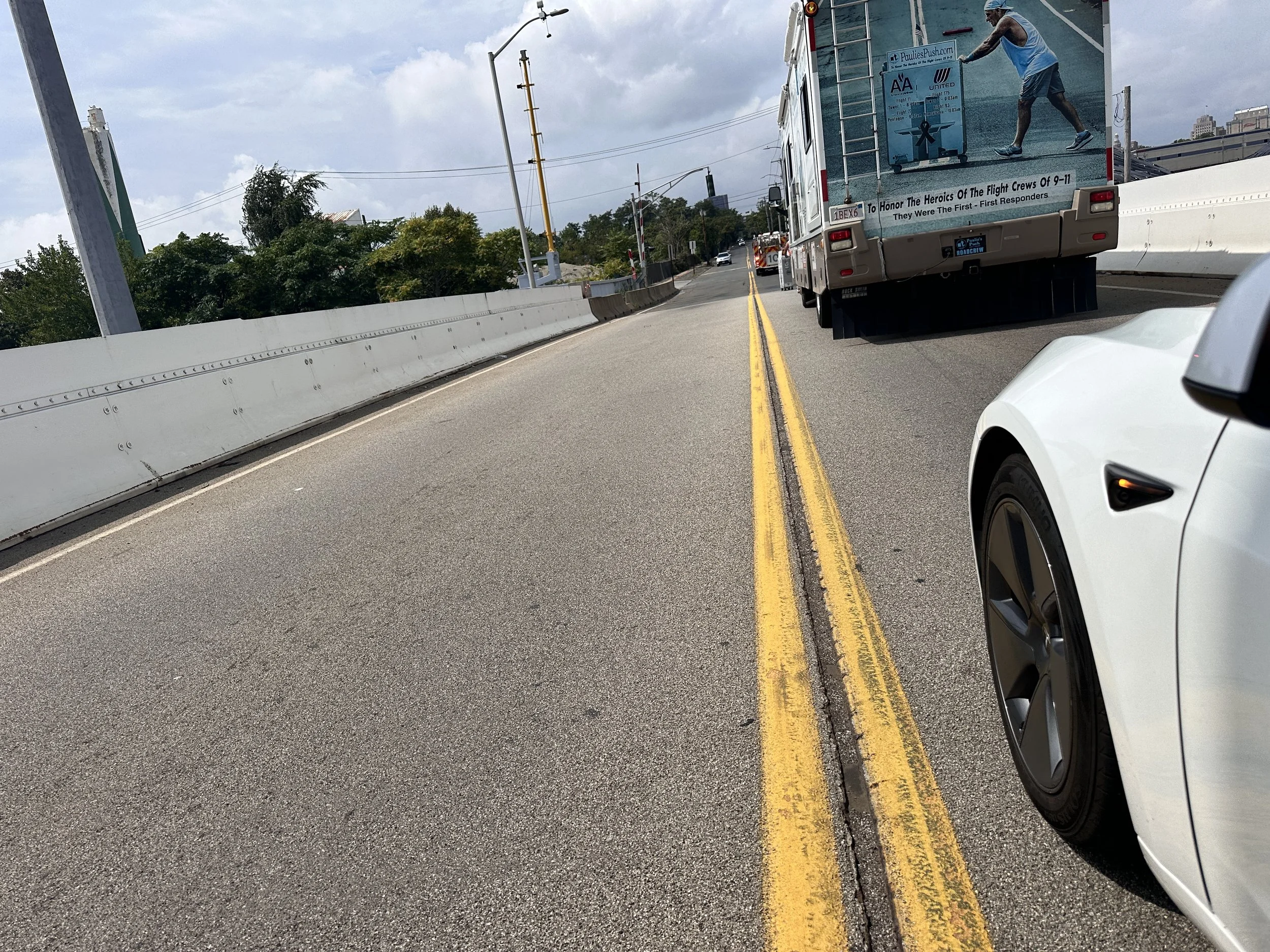
In late August and early September 2021 I had the pleasure of joining Paul Veneto of Paulie’s Push on the road for a few days in Connecticut.
Paulie is a former United Airways flight attendant who was normally scheduled to fly on flight 175, but had a scheduled day off on September 11, 2001. He was friends with many of the crew, having flown with them regularly, and was devastated by what had transpired. Years of substance abuse prevented him from honoring them in a way that he believed that they deserved, but Paulie found sobriety a few years before the 20th anniversary, and planned to honor them in a very personally and profound way: pushing an airline beverage cart from Boston’s Logan Airport to Ground Zero, with a scheduled arrival on 9/11.
I was invited to come out and see the effort by my brother, Jeff, whose company designed the GPS tracking software and camera box that would be permanently affixed to the beverage cart, allowing followers to track Paulie’s progress and, if they chose, join him out on the road as he passed through their towns.
I will confess that, early on, I thought the whoole idea was a bit silly. Those airline carts aren’t meant to be pushed on trails and roads, much less across bridges, up and over curbs, and the like. They’re meant to be pushed up and down an aisle for the entirety of their service lives. Would the cart even make it?
More importantly, would Paulie? A retired flight attendant with more than a decade of drug addiction behind him. This wouldn’t be an easy trek. He’d have to push his cart an average of 12 miles each day to make it to Ground Zero by 9/11. Would he arrive on time? [READ MORE…]


FOR MORE INFORMATION: